
The global swimwear market has undergone a remarkable transformation over the past century, evolving from cumbersome, modesty-focused garments into highly technical, fashion-forward pieces that celebrate body positivity, athletic performance, and personal style. This massively detailed guide will explore every conceivable facet of the industry, from the rich historical context of bathing suits to the cutting-edge fabric technologies defining the modern era. We will also delve deeply into the entrepreneurial journey, offering highly actionable insights for aspiring designers looking to launch their own successful aquatic apparel brands in an increasingly competitive global landscape. Whether you are deeply interested in the historical evolution of beachwear across the decades, the complex chemistry behind stretch textiles and moisture-wicking properties, or the intricate logistics of international supply chains and modern fulfillment, this comprehensive overview provides the absolute entirety of the foundational knowledge you need to succeed in this dynamic sector of the fashion industry.
In addition to historical and technical insights, this guide serves as a practical manual for brand building. The process of transitioning from a rough conceptual sketch to a fully realized, market-ready product involves overcoming numerous hurdles, ranging from selecting the perfect technical fabric to finding ethical labor partners. We aim to demystify these processes, breaking down the complex ecosystem of suppliers, fabric mills, dye houses, and logistics providers. By understanding the inner workings of this vibrant industry, entrepreneurs can make informed, strategic decisions that mitigate risk, optimize their capital investment, and ultimately resonate profoundly with their target demographic.
The Fascinating Historical Evolution of Swimwear
Early Beginnings: From Voluminous Bathing Gowns to Practical Bloomers
In the 18th and 19th centuries, the concept of swimming for leisure or recreation was vastly different from what we understand today. Modesty was the paramount, unyielding concern, particularly for women, whose bathing attire consisted of heavy, voluminous gowns made from thick wool, flannel, or sturdy canvas. These garments were explicitly designed to obscure the body entirely, often featuring lead weights meticulously sewn into the hems to prevent the fabric from floating up and exposing the legs while in the water. The sheer weight of these wet garments made actual swimming practically impossible and incredibly dangerous, restricting wearers to simply wading or bathing near the shore while clinging to safety ropes. The introduction of bathing machines—enclosed wooden carts rolled directly into the sea by horses—allowed individuals to enter the water completely privately, further emphasizing the strict societal norms regarding physical exposure and public decency.
It was not until the latter half of the 19th century that slightly more practical two-piece suits consisting of a knee-length tunic and matching bloomers emerged. This development offered a marginal improvement in mobility while still strictly adhering to the conservative standards of the Victorian era. However, as public health advocates began promoting the cardiovascular and muscular benefits of swimming, the demand for less restrictive clothing slowly began to rise. This incremental shift laid the foundational groundwork for the massive sartorial revolutions that would define the decades to come, proving that utility and cultural norms are forever intertwined in the realm of fashion.

The Roaring Twenties: The Rise of Athleticism and Streamlined Silhouettes
The 1920s brought about a seismic cultural shift, heavily influencing both everyday fashion and social attitudes toward the human body. As swimming gained immense popularity as an Olympic sport and a competitive athletic endeavor, the demand for highly functional swimwear grew exponentially. Pioneers like Annette Kellerman, a famous Australian swimmer and vaudeville star, challenged rigid societal norms by wearing a tightly fitted, one-piece suit that closely resembled modern performance leotards. Although she notoriously faced arrest in Boston for public indecency, her daring fashion statement paved the way for more streamlined, practical designs to enter the mainstream consciousness. Manufacturers rapidly began utilizing ribbed cotton and wool jersey fabrics that clung closer to the body, drastically reducing drag in the water and allowing for actual athletic movement.
During this transformative era, the silhouettes became significantly shorter, boldly exposing the arms and lower legs, which allowed both men and women to move freely and genuinely enjoy the physical benefits of swimming without being weighed down by yards of waterlogged wool. This era unequivocally marked the transition of swimwear from a modesty-preserving necessity to a vibrant symbol of vitality, health, and liberation. The emergence of Hollywood swimming movies and the romanticization of beach culture in popular media further propelled these form-fitting designs into the public desire, creating a booming industry practically overnight.
The Post-War Era: Cultural Shifts and the Invention of the Bikini
Following the conclusion of World War II, a unique combination of lingering fabric rationing and rapidly changing social mores led to the creation of the most iconic and controversial piece of swimwear in modern history: the bikini. Introduced in 1946 by visionary French automotive engineer Louis Réard, the minuscule two-piece suit was brilliantly named after the Bikini Atoll, the remote site of highly publicized nuclear testing. Réard boldly implied that his daring design would have a similarly explosive impact on global culture, a prediction that proved incredibly accurate. Initially met with profound shock, moral outrage, and outright bans in several conservative countries, the bikini gradually gained widespread acceptance throughout the 1950s and 60s, heavily popularized by glamorous silver screen icons like Brigitte Bardot in France and Ursula Andress in the James Bond franchise.
The post-war economic boom also saw the massive rise of international resort culture, effectively turning swimwear into a major, highly lucrative fashion category. Prints became incredibly vibrant and playful, featuring elaborate tropical motifs, classic polka dots, and bold geometric patterns that perfectly reflected the immense optimism and exuberance of the mid-century modern aesthetic. Innovations in textile printing allowed designers to experiment with color in ways previously impossible, transforming beaches across the globe into vibrant runways of personal expression and leisure style.
The Neon Eighties and Minimalist Nineties: Decades of Daring Cuts
As the decades progressed, swimwear continued to evolve, often acting as a mirror reflecting broader societal trends. The 1980s were characterized by unapologetic excess, fitness crazes, and aerobic culture. This translated into swimwear through high-cut legs that dramatically elongated the silhouette, deep V-necks, and the widespread use of intensely bright neon colors. The focus shifted heavily toward showcasing an athletic, toned physique, with pop culture phenomena like the television show Baywatch cementing the high-cut, bright red one-piece as an indelible cultural icon. Designers pushed the boundaries of traditional construction, utilizing advanced spandex blends to create suits that were both daringly revealing and structurally supportive.
In stark contrast, the 1990s ushered in an era of sleek, refined minimalism. The loud neons of the previous decade were replaced by muted tones, monochromatic palettes, and sophisticated, athletic-inspired cuts. Brands like Calvin Klein popularized a clean, almost utilitarian aesthetic that emphasized subtle luxury over overt flashiness. String bikinis and simple, unadorned tank suits became the standard, focusing on high-quality fabrics and precise tailoring. This back-and-forth swing of the fashion pendulum demonstrates the incredible versatility of swimwear as a medium for design, constantly adapting to the ever-changing tastes and priorities of the global consumer base.

The Intricate Science of Swimwear Fabrics
The Revolution of Synthetic Fibers: The Dawn of Modern Textiles
The true, profound modernization of swimwear was fundamentally driven by incredible advancements in textile science and chemical engineering. Prior to the mid-20th century, natural fibers like heavy wool and cotton completely dominated the market. However, these materials absorbed immense amounts of water, becoming incredibly heavy, completely misshapen, and agonizingly slow to dry, leading to a generally miserable user experience. The commercialization of nylon in the late 1930s offered the very first truly viable synthetic alternative. Nylon was remarkably lightweight, inherently hydrophobic (meaning it repels water), and exceptionally quick-drying, making it vastly superior for any aquatic environment.
Shortly thereafter, the introduction of polyester provided another highly durable, colorfast option that strongly resisted fading from brutal sunlight exposure and the harsh, degrading chemicals found in swimming pools. Today, high-grade polyester and advanced nylon polymers remain the foundational yarns for nearly all performance and leisure swimwear on the market. They are prized for their incredible resilience, smooth texture, and supreme versatility in complex knit constructions. The continuous refinement of these synthetic polymers has allowed for the creation of fabrics that mimic the incredibly soft feel of natural cotton while maintaining the rugged performance characteristics required to withstand the elements.
The Magic of Elastane and Spandex: Achieving the Perfect Stretch
While nylon and polyester provided crucial durability and water resistance, they entirely lacked the essential element of multidirectional stretch required for a truly form-fitting, comfortable garment. This massive problem was elegantly solved in 1959 with the groundbreaking invention of spandex (an anagram of the word “expands”), a synthetic fiber also known globally by the famous brand name Lycra. Elastane fibers are truly remarkable; they can stretch up to a staggering 500% of their original length and repeatedly return to their precise initial shape without breaking, sagging, or losing their incredible elasticity over time.
Blending just 10% to 20% high-quality spandex with nylon or polyester creates the indispensable four-way stretch fabric that allows modern swimwear to contour absolutely perfectly to the human body. This specialized elasticity ensures that the garment stays securely in place during vigorous athletic movement, provides subtle, flattering compression and support, and comfortably accommodates a remarkably wide variety of body shapes with exceptional ease. The ultimate longevity and quality of the suit rely heavily on the specific grade of the elastane used, as inferior, cheap spandex can rapidly become brittle, yellow, and degrade quickly when repeatedly exposed to chlorine, harsh salt, and the chemicals found in sunscreens and tanning oils.
Sustainable Innovations in Textiles: Paving the Way for Eco-Friendly Fashion
In recent years, the massive global fashion industry’s devastating environmental impact has come under intense, highly necessary scrutiny, prompting an massive surge in sustainable textile innovations. The swimwear sector, historically reliant on virgin, petroleum-based synthetics that contribute to pollution, has aggressively embraced recycled and regenerated alternatives. ECONYL, a highly advanced regenerated nylon created from discarded fishing nets, industrial plastic waste, and fabric scraps recovered from oceans and landfills, has become incredibly popular among eco-conscious designers and luxury brands alike. Similarly, Repreve offers an exceptionally high-quality polyester yarn spun entirely from recycled PET plastic water bottles.
These sustainable, high-tech fabrics perform absolutely identically to their virgin counterparts in terms of stretch, durability, and color retention, but they significantly reduce the overall carbon footprint of production and actively divert immense amounts of waste from fragile marine ecosystems and overflowing landfills. Furthermore, advanced developments in digital sublimation printing have drastically reduced the excessive water consumption and toxic chemical runoff heavily associated with traditional, antiquated fabric dyeing processes. Modern brands are increasingly, and rightfully, prioritizing radical transparency, going to great lengths to ensure that their complex supply chains are environmentally responsible from the raw material extraction stage all the way to the delivery of the finished product to the end consumer.
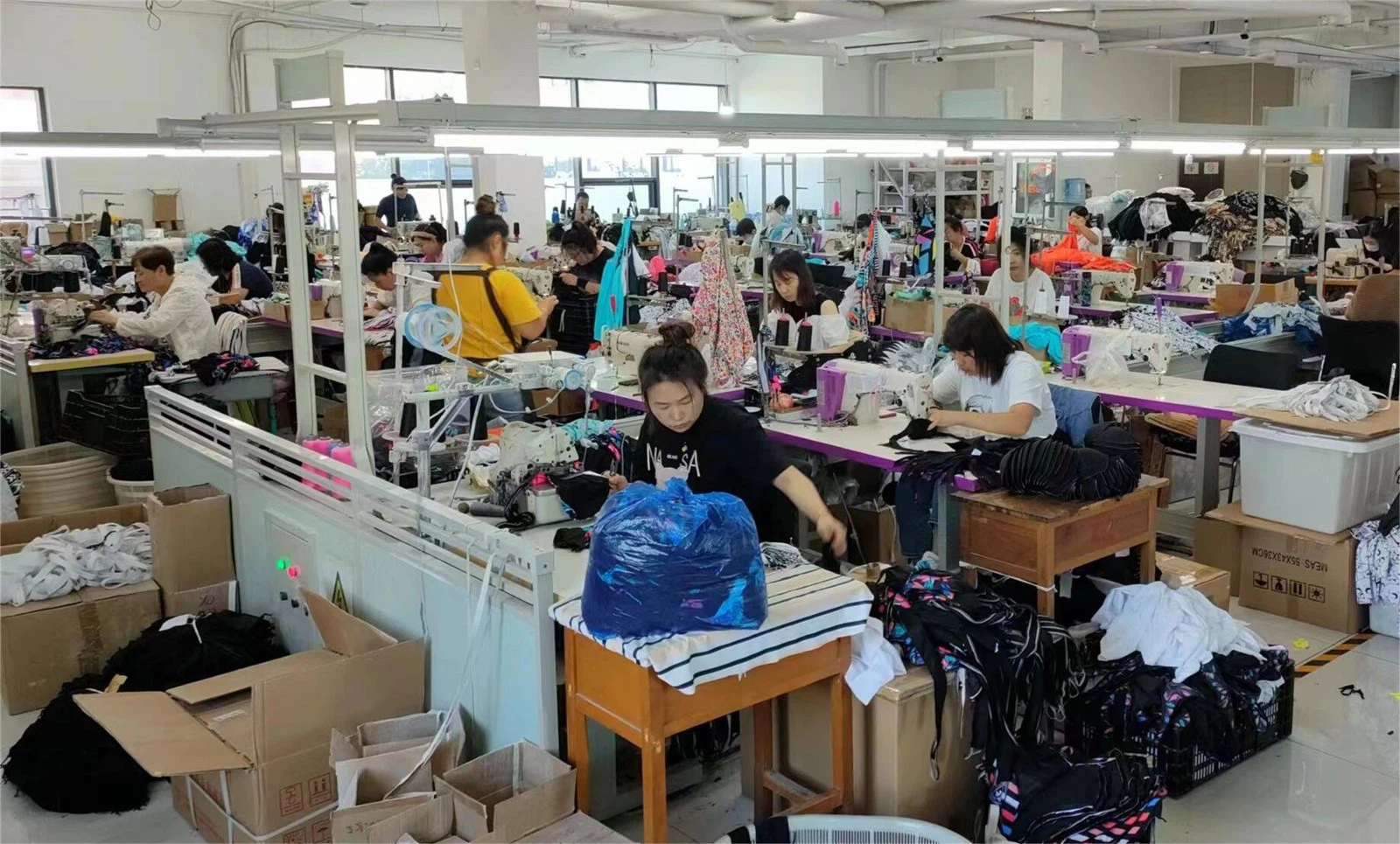
The Complex, Multi-Stage Process of Swimwear Manufacturing
Conceptualization, Trend Forecasting, and Design Prototyping
Creating a truly successful, market-disrupting swimwear collection begins long before a single piece of fabric is ever cut on the factory floor. The rigorous conceptualization phase involves extensive, data-driven market research, forward-looking trend forecasting, and the meticulous curation of mood boards that explicitly define the aesthetic direction of the upcoming season. Designers must carefully consider emerging silhouette trends, forecasted color palettes, and unique, eye-catching embellishments while expertly balancing aesthetic appeal with absolute functional performance. Once the visual concepts are firmly established, specialized technical designers translate these abstract ideas into highly detailed technical packages, commonly referred to within the industry as “tech packs.” First and foremost, securing a reliable Custom Swimwear Manufacturer can make or break your new apparel business.
A comprehensive tech pack acts as the absolute blueprint for the garment, containing precise flat vector sketches, exact millimeter measurements, exact fabric yield specifications, highly specific hardware details (such as rust-proof sliders and clasps), and incredibly detailed sewing construction instructions. These exhaustive tech packs are absolutely essential for ensuring that the final manufactured product matches the designer’s original, intended vision exactly, leaving virtually no room for costly misinterpretation on the factory floor. The level of detail included in these documents often separates amateur designers from true industry professionals, as clarity in communication is the bedrock of successful apparel production.
The Highly Technical Art of Pattern Making and Precise Grading
Pattern making in the context of swimwear is a highly specialized, intensely technical skill that requires a profound, mathematical understanding of human anatomy and exactly how four-way stretch fabrics behave under varying levels of tension across different body parts. Unlike rigid woven garments, swimwear patterns must carefully account for the “negative ease” of the fabric—meaning the flat pattern is purposefully drafted significantly smaller than the actual body measurements so that the spandex must stretch significantly to fit, thereby creating a snug, highly supportive, and flattering silhouette. Every Custom Swimwear Manufacturer has its own set of minimum order quantities and capabilities. The initial, foundational pattern is usually created painstakingly for a specific base size (very often a medium or a standard size 8).
Once the initial prototype sample is sewn and critically fitted on a live fit model, numerous micro-adjustments are made to perfect the fit, a rigorous process that can easily take several frustrating iterations before perfection is achieved. After the base size is finalized and approved, the digital pattern is “graded” to create the full, inclusive range of sizes offered by the brand. This requires meticulously calculating the exact proportional increments for every single dimension (bust, waist, hip, torso length) to ensure that the exquisite fit remains entirely consistent and flattering whether the final customer is purchasing a size Extra-Small or a size Triple-Extra-Large.
The Critical Prototyping, Fitting, and Sampling Phase
The exhaustive sampling phase is absolutely critical for ironing out unforeseen design flaws, testing hardware durability, and rigorously evaluating actual fabric performance under real-world conditions. When a Custom Swimwear Manufacturer evaluates your tech pack, they look for clarity and precision. Initially, a rough “fit sample” is created quickly using available substitute fabrics of similar weight and stretch percentage simply to check the overall construction methodology and the general silhouette on a live body. Once this preliminary fit is tentatively approved, a “pre-production sample” (PPS) is meticulously manufactured using the exact, finalized bulk fabrics, the custom-engineered prints, and the specialized, branded hardware that will ultimately be used in the final production run.
This PPS serves as the absolute ultimate benchmark for the entire project. The designer will rigorously test this sample in real-world scenarios, evaluating precisely how the fabric behaves when completely soaked, whether the metal hardware rusts or heats up uncomfortably in the blazing sun, and if the intricate stitching holds up flawlessly under extreme stretching and stress. Only after the PPS receives final, signed approval does mass bulk manufacturing officially commence. This painstaking process is absolutely vital for ensuring that catastrophic, extraordinarily costly mistakes are entirely avoided during mass production, protecting the brand’s financial investment and its precious reputation.
Building Your Own Successful Swimwear Brand from Scratch
Identifying a Unique Market Niche and Defining Your Target Audience
The contemporary global swimwear market is undeniably highly saturated, making it absolutely imperative for new, emerging brands to deliberately carve out a highly distinct and defensible niche. Attempting to broadly appeal to absolutely everyone often results in a severely diluted brand message that ultimately resonates with no one at all. Highly successful entrepreneurs systematically identify specific, glaring gaps in the market—whether it is sustainable, high-end luxury resort wear for the affluent traveler, highly compressive, hydro-dynamic athletic suits for serious competitive swimmers, exceptionally stylish sun-protective clothing for active children, or genuinely inclusive, fashion-forward plus-size options that absolutely refuse to compromise on modern style or structural support.
By intensely focusing on a highly specific target demographic, brands can perfectly tailor their marketing messaging, their unique design aesthetic, and their specific product features to solve highly unique problems or fulfill deeply unmet consumer desires. Your chosen Custom Swimwear Manufacturer should ideally have experience with the specific fabrics you want to use. This hyper-targeted, laser-focused approach fosters incredibly strong customer loyalty and allows the burgeoning brand to rapidly establish deep authority within a specialized segment before eventually considering expanding into broader, more highly contested categories in the future.
Developing a Compelling, Emotionally Resonant Brand Identity
A successful modern brand is infinitely much more than just a clever logo or a catchy, memorable name; it is the profound, enduring emotional connection you meticulously build with your core audience. Developing a genuinely compelling brand identity requires deeply defining your absolute core values, your uncompromising mission statement, and the overall aspirational lifestyle your products so vividly represent. Are you strategically selling a glamorous, high-end jet-setting aesthetic perfect for the Amalfi coast, or are you promoting a rugged, adventurous, highly active surf-focused lifestyle meant for the beaches of Bali? Every single touchpoint—from your customized website design and your eco-friendly packaging down to your specific social media tone of voice and your empathetic customer service—must consistently and loudly reflect this core identity.
Communicating your brand values to your Custom Swimwear Manufacturer ensures that your products align with your ethos. High-quality, evocative lifestyle photography and authentic, captivating storytelling are absolutely crucial tools for effectively conveying this deep brand essence. They allow potential customers to vividly visualize themselves actively living the highly aspirational lifestyle your swimwear embodies, thereby transforming a simple piece of clothing into a highly desirable symbol of an entire way of living.
Navigating the Intricacies of the Global Supply Chain
Managing the remarkably complex global supply chain is arguably the single most challenging, headache-inducing aspect of running a physical fashion business today. It involves expertly coordinating multiple, highly dispersed moving parts across wildly different geographic regions and time zones, including specialized fabric mills, custom hardware suppliers, massive dye houses, and the final cut-and-sew assembly factory. A forward-thinking Custom Swimwear Manufacturer is likely to invest in eco-friendly practices. Savvy entrepreneurs must carefully and mathematically balance their inventory levels to brilliantly avoid tying up excessive, desperately needed capital in unsold stock while simultaneously ensuring they possess enough physical product to aggressively meet consumer demand during peak selling seasons without running out of popular sizes.
Furthermore, developing a deep understanding of the labyrinthine nuances of international shipping logistics, complex import duties, tedious customs clearance procedures, and expensive freight forwarding is absolutely essential for maintaining healthy, sustainable profit margins. Building incredibly strong, highly transparent, mutually beneficial relationships with trusted suppliers and maintaining constant, open lines of communication can dramatically mitigate unforeseen risks, actively prevent extraordinarily costly production delays, and ensure a smooth, highly efficient flow of finished goods directly from the distant factory floor straight to the eager customer’s doorstep.
Strategic Operational Considerations in Swimwear Production
Implementing Rigorous Quality Assurance and Control Protocols
In the highly competitive world of swimwear, meticulous construction quality is absolutely paramount to long-term survival. A standard swimsuit is routinely subjected to incredible, repeated stress—it is stretched aggressively in multiple directions countless times, brutally exposed to highly abrasive surfaces like jagged rocks, rough sand, and concrete pool decks, and completely soaked in harsh, degrading chemicals, intense UV radiation, and corrosive saltwater. The prototyping phase is where a top-tier Custom Swimwear Manufacturer truly shines. If a crucial seam pops under tension, an underwire painfully pokes through the casing, or a vibrant custom color bleeds heavily onto a towel after a single wash, the brand’s hard-earned reputation will suffer immediate, immense, and often irreparable damage.
Implementing incredibly rigorous Quality Control (QC) protocols at every stage of production is not just recommended; it is essential. This strictly includes intensely inspecting all incoming raw materials for minute defects before cutting begins, constantly monitoring the intricate sewing process on the active factory floor to ensure correct stitch tension, and performing strict AQL (Acceptable Quality Limit) inspections on the finalized bulk order immediately before it is approved to ship. Critical testing parameters should rigorously evaluate UV colorfastness, absolute seam burst strength, long-term elasticity retention after repeated washings, and severe pilling resistance. Brands that invest heavily and unapologetically in stringent QC experience significantly lower, incredibly manageable return rates and successfully build a fiercely loyal customer base that implicitly trusts the outstanding durability of their premium products.
Understanding the Vital Importance of Sizing and True Inclusivity
Historically, the mainstream fashion industry has struggled profoundly with archaic sizing standards, and the swimwear category has been particularly, notoriously awful for its severely limited and highly inconsistent sizing metrics that alienate millions of potential buyers. However, the empowered modern consumer rightfully demands absolute inclusivity. A dedicated Custom Swimwear Manufacturer can guide you through the complexities of grading sizes. Successful, forward-thinking brands are increasingly, and rapidly, expanding their core size ranges dramatically, offering highly supportive cup-sized tops that provide the exact engineering of a structured bra, and purposefully introducing brilliant adaptive features specifically designed for individuals with varying physical disabilities.
Designing successfully for a beautifully diverse range of body types requires significantly more than simply scaling up a small base pattern mathematically; it requires a highly thoughtful, complete re-engineering of the garment’s internal architecture to seamlessly provide appropriate structural support, desired coverage, and supreme comfort for vastly different physical proportions. Intelligent features like highly adjustable thick straps, easily removable molded padding, and varying, selectable levels of bottom coverage allow diverse customers to expertly customize the specific fit to their totally unique, personal preferences, thereby fostering a vastly more positive, deeply empowering, and ultimately far more lucrative shopping experience for everyone involved.
The Absolute Necessity of Prioritizing Ethical Labor Practices
As modern consumers become significantly more highly educated about the grim realities of global garment production, they are increasingly, and vocally, demanding absolute accountability and transparency from the apparel brands they choose to financially support. The outdated, exploitative fast fashion model, often tragically characterized by incredibly low wages, forced overtime, and highly unsafe, dangerous working conditions, is facing massive, well-deserved global backlash. Choosing a Custom Swimwear Manufacturer that prioritizes ethical labor is no longer optional; it is an industry standard. Truly ethical brands now go to extraordinarily great lengths to actively ensure that their factory workers are consistently paid a fair, thriving living wage, operate daily in completely safe, well-ventilated environments, and are treated with the utmost dignity, respect, and fundamental human rights.
Attaining and prominently displaying strict, third-party certifications such as WRAP (Worldwide Responsible Accredited Production) or Fair Trade genuinely gives conscious consumers the immense confidence that their hard-earned purchases are absolutely not secretly contributing to horrific human rights abuses overseas. Radical transparency is unequivocally the key here; brands that boldly and openly share detailed information, photographs, and video tours about their partner factories and complex supply chain practices successfully build incredibly deep, unshakeable trust and fierce brand advocacy among increasingly socially conscious, highly vocal consumers who actively vote with their wallets.
Advanced Marketing and Selling Strategies for Your Swimwear Collection
Leveraging Digital Marketing, Influencer Partnerships, and Social Media
Swimwear is an inherently, incredibly visual product, making highly visual platforms like Instagram, TikTok, and Pinterest undeniably the most powerful, effective marketing channels currently available to any brand. Consistently producing high-quality, breathtaking imagery, highly engaging short-form video content, and leveraging authentic, relatable user-generated content are absolutely essential tactics for capturing fleeting consumer attention in a massively crowded, incredibly noisy digital landscape. An experienced Custom Swimwear Manufacturer will often provide valuable insights into current market trends. Influencer marketing remains highly, incredibly effective when executed correctly; strategically partnering with key individuals whose personal, curated brand perfectly aligns with your specific aesthetic can immediately introduce your amazing products to highly targeted, incredibly engaged, and very eager audiences who trust the influencer’s specific recommendations implicitly.
Beyond simply relying on organic social media reach, which is often severely throttled by algorithms, strategic, data-driven investment in highly targeted paid advertising (such as sophisticated Meta Ads or aggressive Google Shopping campaigns) effectively allows brands to intelligently retarget previous website visitors, actively combat high cart abandonment rates, and predictably scale their customer acquisition efforts with mathematical precision. The ultimate key to advertising success is to relentlessly A/B test various diverse creatives, compelling ad copies, and distinct target audiences continuously, leveraging machine learning algorithms to ruthlessly optimize the Return on Advertising Spend (ROAS) and drive highly profitable, sustainable growth.
Building a Highly Optimized, Conversion-Driven E-commerce Experience
For modern Direct-To-Consumer (DTC) brands, the digital website is undeniably the absolute flagship store, serving as the sole point of conversion for global customers. An intensely optimized, meticulously designed e-commerce experience is absolutely critical for successfully converting expensive inbound traffic into actual, profitable sales. The website must be incredibly fast-loading, flawlessly mobile-responsive, and intuitively, frictionlessly navigable. Negotiating terms with your Custom Swimwear Manufacturer requires a delicate balance of respect and business acumen. Because online customers absolutely cannot physically touch or try on the intricate garments before purchasing, providing exhaustively comprehensive sizing guides, incredibly detailed product descriptions highlighting fabric tech, and brilliantly lit, high-resolution zoomable images from multiple dynamic angles is undeniably crucial.
Brilliantly incorporating authentic customer reviews, especially incredibly helpful reviews that include unedited photos of real, diverse people wearing the specific suits, significantly and measurably reduces crippling purchase anxiety and builds massive, undeniable social proof. Furthermore, offering an incredibly seamless, one-click checkout process, highly transparent, easy-to-understand shipping policies, and a completely hassle-free, automated return and exchange system can dramatically, positively improve baseline conversion rates and fundamentally foster long-term customer satisfaction and extremely valuable repeat purchase behavior.
Navigating the Challenges of Seasonality and Managing Cash Flow
The global swimwear industry is heavily, undeniably impacted by intense seasonality, with the vast majority of retail sales typically, predictably occurring in the frantic spring and early summer months as consumers aggressively prepare for highly anticipated vacations. This highly concentrated, remarkably short selling window inevitably creates unique, intensely stressful cash flow challenges for independent businesses. Furthermore, a high-quality Custom Swimwear Manufacturer implements rigorous quality control checks before shipping. Emerging brands must frequently finance the massive, expensive bulk production of their seasonal inventory many months before ever generating a single dollar of revenue from actual consumer sales, requiring incredibly tight, disciplined financial modeling and significant access to working capital.
To strategically mitigate the severe, inherent risks of this extreme seasonality, many savvy brands are rapidly expanding their core product lines to permanently include highly lucrative “resort wear” categories, such as elegant cover-ups, comfortable loungewear, and versatile activewear, which possess a much broader, highly profitable year-round appeal regardless of the immediate weather. Additionally, aggressively targeting entirely new customers located in different global hemispheres (where the seasons are reversed) or heavily promoting exclusive, limited-edition winter getaway and luxury cruise collections can significantly help dramatically smooth out otherwise highly volatile revenue fluctuations, fundamentally ensuring a vastly steadier, vastly more predictable cash flow throughout the entire fiscal year.
The Exciting Future of the Swimwear Industry
Technological Advancements in Virtual Design and Augmented Retail
The fascinating, rapidly accelerating intersection of high fashion and advanced technology is rapidly, fundamentally transforming exactly how complex swimwear is conceptualized, efficiently manufactured, and ultimately sold to the end consumer. Groundbreaking 3D design software explicitly allows brilliant technical designers to perfectly visualize intricate garments on fully customizable virtual avatars, accurately checking precise fit, tension, and realistic fabric drape long before ever cutting a single inch of expensive physical fabric. The right Custom Swimwear Manufacturer acts as an extension of your own internal team rather than just a vendor. This remarkable technological leap drastically, undeniably reduces the massive time delays and the incredible material waste historically associated with the tedious physical sampling process.
In the rapidly evolving retail space, cutting-edge Augmented Reality (AR) try-on technology is rapidly emerging as an incredibly powerful, conversion-boosting tool, seamlessly allowing curious customers to simply use their high-resolution smartphone cameras to instantly see exactly how a specific, brightly colored suit will accurately look and fit on their own specific, unique body type in real-time. Furthermore, incredibly sophisticated, AI-driven sizing recommendation engines are beginning to securely use millions of aggregated data points from previous global scans to intelligently suggest the absolute perfect size for every single shopper, a remarkable innovation that promises to drastically, permanently reduce the astronomically high return rates primarily caused by poor fit and sizing confusion.
The Inevitable Drive Toward a Truly Circular Economy in Fashion
The critical conversation surrounding sustainability is rapidly moving far beyond simply utilizing recycled plastic materials and is firmly, aggressively shifting towards establishing a truly, comprehensively circular economy model. This incredibly important, paradigm-shifting concept intensely focuses on intentionally designing all products with their absolute ultimate end-of-life explicitly in mind, carefully ensuring that intricate garments can be easily, efficiently recycled, creatively upcycled, or safely biodegraded rather than tragically ending up polluting massive global landfills. By collaborating closely, you and your Custom Swimwear Manufacturer can troubleshoot fit issues efficiently. Some incredibly innovative, forward-thinking brands are currently implementing brilliant, highly effective take-back programs, generously offering significant discounts to loyal customers who responsible return their completely worn-out suits so the complex materials can be chemically processed and spun directly into brand-new yarns.
While the incredibly complex chemical technology required to seamlessly separate and fully recycle heavily blended spandex and nylon fabrics is still admittedly in its absolute infancy, immense, unprecedented financial investments are currently being made in advanced chemical recycling processes globally. As these remarkable, world-changing technologies mature, scale, and become commercially viable over the next decade, the entire massive swimwear industry will undoubtedly take incredibly significant, monumental strides toward achieving true, uncompromising zero-waste operations, fundamentally changing the very nature of global apparel manufacturing forever.
Final Thoughts: Embarking on Your Entrepreneurial Journey
Entering the highly competitive, incredibly fast-paced swimwear market undeniably requires a highly unique, potent blend of brilliant creative vision, deep technical understanding of complex textiles, and absolutely relentless, uncompromising business acumen. From carefully navigating the incredibly rich, fascinating history of aquatic apparel to thoroughly mastering the complex intricacies of engineering four-way stretch fabrics, the entrepreneurial learning curve is undeniably incredibly steep but ultimately, profoundly rewarding. Ultimately, your relationship with your Custom Swimwear Manufacturer dictates the long-term scalability of your fashion line. By relentlessly focusing on superior quality, wholeheartedly embracing truly sustainable and radically inclusive practices, and painstakingly building a deeply resonant, highly emotional brand identity, passionate new designers can successfully, permanently establish themselves in this vibrant, incredibly dynamic global industry.
As shifting consumer preferences continue to rapidly, inevitably evolve towards highly eco-conscious and exceptionally functional, versatile garments, the incredible opportunities for massive innovation and significant financial success are practically boundless. The global swimwear market is emphatically not just about selling pieces of fashion; it is fundamentally about deeply empowering diverse individuals globally to feel incredibly confident, perfectly comfortable, and undeniably beautiful in their own unique skin, whether they are aggressively swimming laps in an Olympic-sized pool, competitively surfing massive ocean waves, or simply lounging peacefully on a pristine, sun-drenched tropical beach.
If you are truly ready to take the leap and decisively bring your unique, brilliant creative vision to vibrant life, reach out to us today. Our incredibly dedicated team of seasoned industry experts is fully equipped and passionately dedicated to helping you successfully navigate the highly complex, often confusing world of apparel creation from sketch to shipment, absolutely ensuring your new brand stands out boldly in the crowded marketplace with truly unparalleled quality, stunning design, and exceptional market positioning.